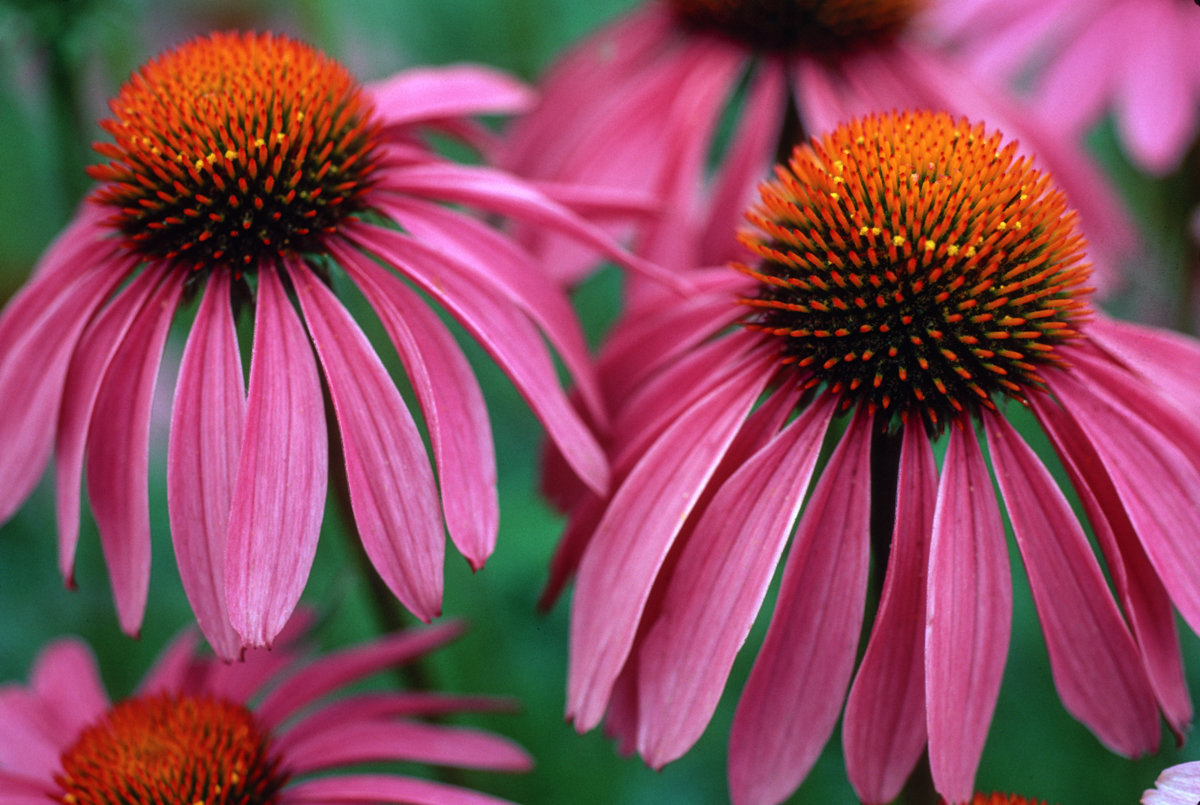
An echinacea monograph for the home
Latin Name: Echinacea purpurea, Echinacea angustifolia, Echinacea pallida
Common Names: echinacea, purple coneflower, coneflower, American coneflower
This echinacea monograph provides basic information about echinacea—common names, usefulness and safety, and resources for more information.
Source: https://nccih.nih.gov/
BasicsResearchResultsDosingSafetyWildcraftingReferencesPubMed
Echinacea Basics
- There are nine known species of echinacea, all of which are native to North America. They were used by Native Americans of the Great Plains region as traditional medicines.
- Echinacea is used as a dietary supplement for the common cold and other infections, based on the idea that it might stimulate the immune system to more effectively fight infection. Echinacea preparations have been used topically (applied to the skin) for wounds and skin problems.
- The roots and above-ground parts of the echinacea plant are used fresh or dried to make teas, squeezed (expressed) juice, extracts, capsules and tablets, and preparations for external use. Several species of echinacea, most commonly Echinacea purpurea or Echinacea angustifolia, may be included in dietary supplements.
Echinacea in Health Research
- Many studies have been done on echinacea and the common cold. Much less research has been done on the use of echinacea for other health purposes.
Echinacea Research Summary
- Taking echinacea after you catch a cold has not been shown to shorten the time that you’ll be sick.
- Taking echinacea while you’re well may slightly reduce your chances of catching a cold. However, the evidence on this point isn’t completely certain. Currently, the National Center for Complementary and Integrative Health (NCCIH) is funding research to identify the active constituents in echinacea and to study the effects on the human immune system of substances in bacteria that live within echinacea plants.
Preparation & Dosing *
*Always check with your doctor before taking any alternative therapy.
| Application | Dosage | Preparation | Source |
|---|---|---|---|
| Infusion | 3 grams (3/4 teaspoon) | Steep dried root in 8oz boiling water for 15 minutes | Herbs & Natural Supplements, vol 4 |
| Liquid Extract | 1-3mL (1:2) up to 3 X daily | Herbs & Natural Supplements, vol 4 | |
| Tincture | 1-4mL (1:5 40% POH) up to 3 X daily | Medical Herbalism |
Echinacea Safety
- There are many different echinacea products. They may contain different species of plants or different parts of the plant, be manufactured in different ways, and have other ingredients in addition to echinacea. Most of these products have not been tested in people.
- For most people, short-term oral (by mouth) use of echinacea is probably safe; the safety of long-term use is uncertain.
- The most common side effects of echinacea are digestive tract symptoms, such as nausea or stomach pain.
- Some people have allergic reactions to echinacea, which may be severe. Some children participating in a clinical trial of echinacea developed rashes, which may have been caused by an allergic reaction. People with atopy (a genetic tendency toward allergic reactions) may be more likely to have an allergic reaction when taking echinacea.
- Current evidence indicates that the risk of interactions between echinacea supplements and most medications is low.
Echinacea References
- Barrett B, Brown R, Rakel D, et al. Echinacea for treating the common cold: a randomized trial. Annals of Internal Medicine. 2010;153(12):769-777.
- Bauer R, Woelkart K. Echinacea species. In: Coates PM, Betz JM, Blackman MR, et al., eds. Encyclopedia of Dietary Supplements. 2nd ed. New York, NY: Informa Healthcare; 2010:226-234.
- Echinacea. In: Blumenthal M, Goldberg A, Brinckmann J, eds. Herbal Medicine: Expanded Commission E Monographs. Newton, MA: Integrative Medicine Communications; 2000:88-102.
- Echinacea. Natural Medicines Web site. Accessed at naturalmedicines.therapeuticresearch.com on April 3, 2015. [Database subscription].
- Gurley BJ, Fifer EK, Gardner Z. Pharmacokinetic herb-drug interactions (part 2): drug interactions involving popular botanical dietary supplements and their clinical relevance. Planta Medica. 2012;78(13):1490-1514.
- Karsch-Völk M, Barrett B, Kiefer D, et al. Echinacea for preventing and treating the common cold. Cochrane Database of Systematic Reviews. 2014;(2):CD000530. Accessed at https://www.thecochranelibrary.com(link is external) on April 6, 2015.
- Karsch-Völk M, Barrett B, Linde K. Echinacea for preventing and treating the common cold. JAMA. 2015;313(6):618-619.
- Taylor JA, Weber W, Standish L, et al. Efficacy and safety of echinacea in treating upper respiratory tract infections in children: a randomized controlled trial.JAMA. 2003;290(21):2824-2830.