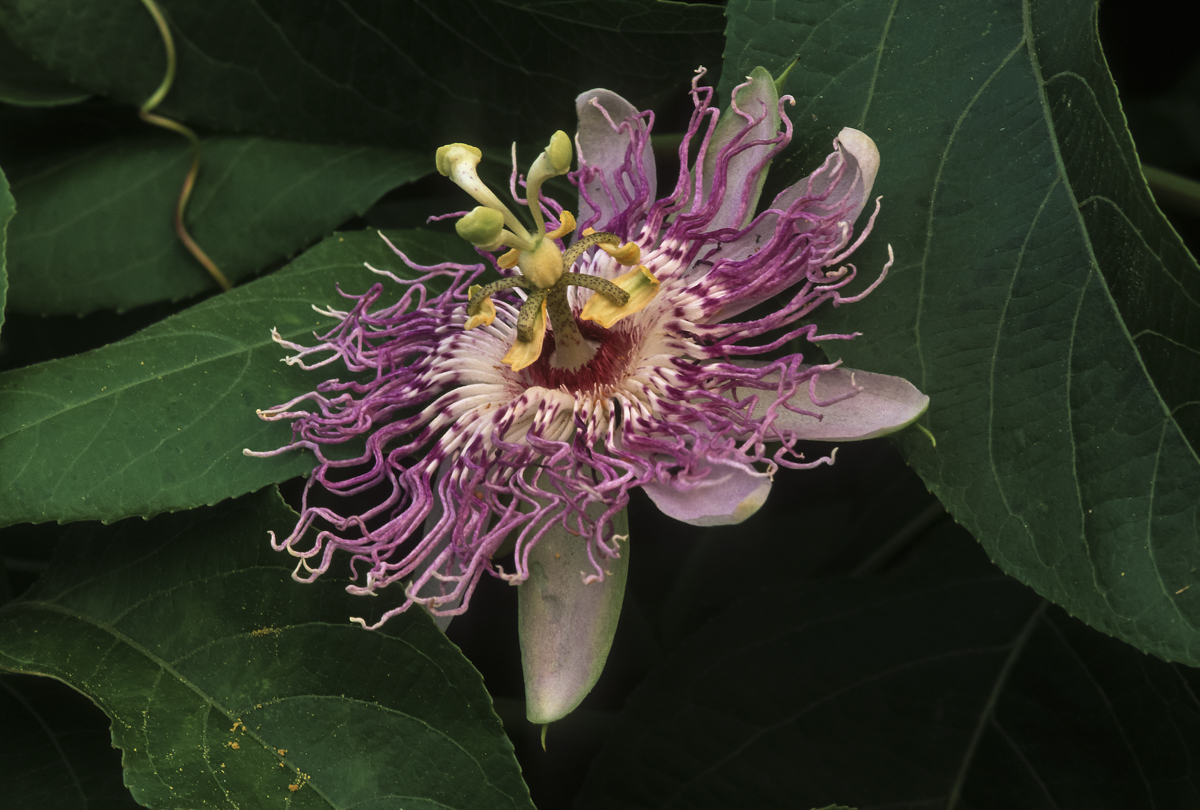
A passionflower monograph for the home
Latin Name: Passiflora incarnata
Common Names: passionflower, maypop, apricot vine, maracuja, water lemon
This passionflower monograph provides basic information about passionflower—common names, usefulness and safety, and resources for more information.
Source: https://nccih.nih.gov/
BasicsResearchResultsDosingSafetyWildcraftingReferencesPubMed
Passionflower Basics
- Sixteenth-century Spanish explorers learned of passionflower in Peru. Native peoples of the Americas used passionflower as a mild sedative.
- Today, passionflower is used as a dietary supplement for anxiety and sleep problems, as well as for pain, heart rhythm problems, menopausal symptoms, and attention-deficit hyperactivity disorder. It is applied to the skin for burns and to treat hemorrhoids.
- Passionflower is available dried (which can be used to make tea), or as liquid extract, capsules, or tablets.
Passionflower in Health Research
- Passionflower’s effect on anxiety and other conditions hasn’t been studied extensively.
Passionflower Research Summary
- A 2007 review of two older studies with198 people compared the ability of passionflower and two drugs to reduce anxiety. It concluded that the three substances had about the same degree of minimal effectiveness; however, the researchers noted that the small number of studies don’t allow clear conclusions to be drawn.
- A more recent review suggests that the majority of passionflower studies in people for any condition have serious flaws and, therefore, do not support its use.
Passionflower Safety
- Passionflower is generally considered to be safe but may cause drowsiness.
- Passionflower should not be used during pregnancy as it may induce contractions.
Passionflower References
- Miroddi M, Calapai G, Navarra M, et al. Passiflora incarnata L: ethnopharmacology, clinical application, safety and evaluation of clinical trials. Journal of Ethnopharmacology. 2013;150(3):791-804.
- Miyasaka LS, Atallah AN, Soares B. Passiflora for anxiety disorder. Cochrane Database of Systematic Reviews. 2007;(1):CD004518 [edited 2009]. Accessed at https://www.thecochranelibrary.com(link is external) on June 4, 2015.
- Passionflower. Natural Medicines Web site. Accessed at naturalmedicines.therapeuticresearch.com/ on June 4, 2015. [Database subscription].